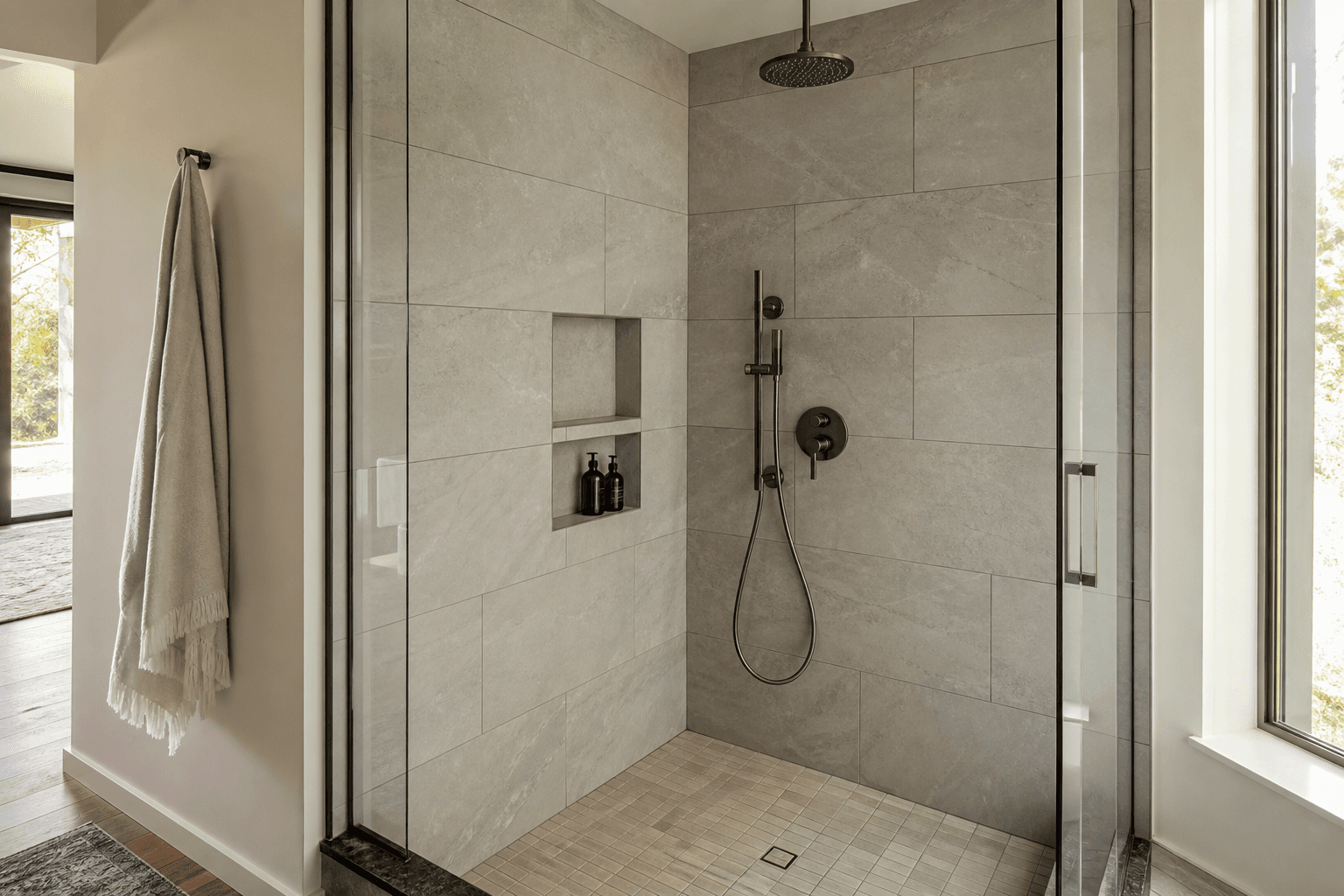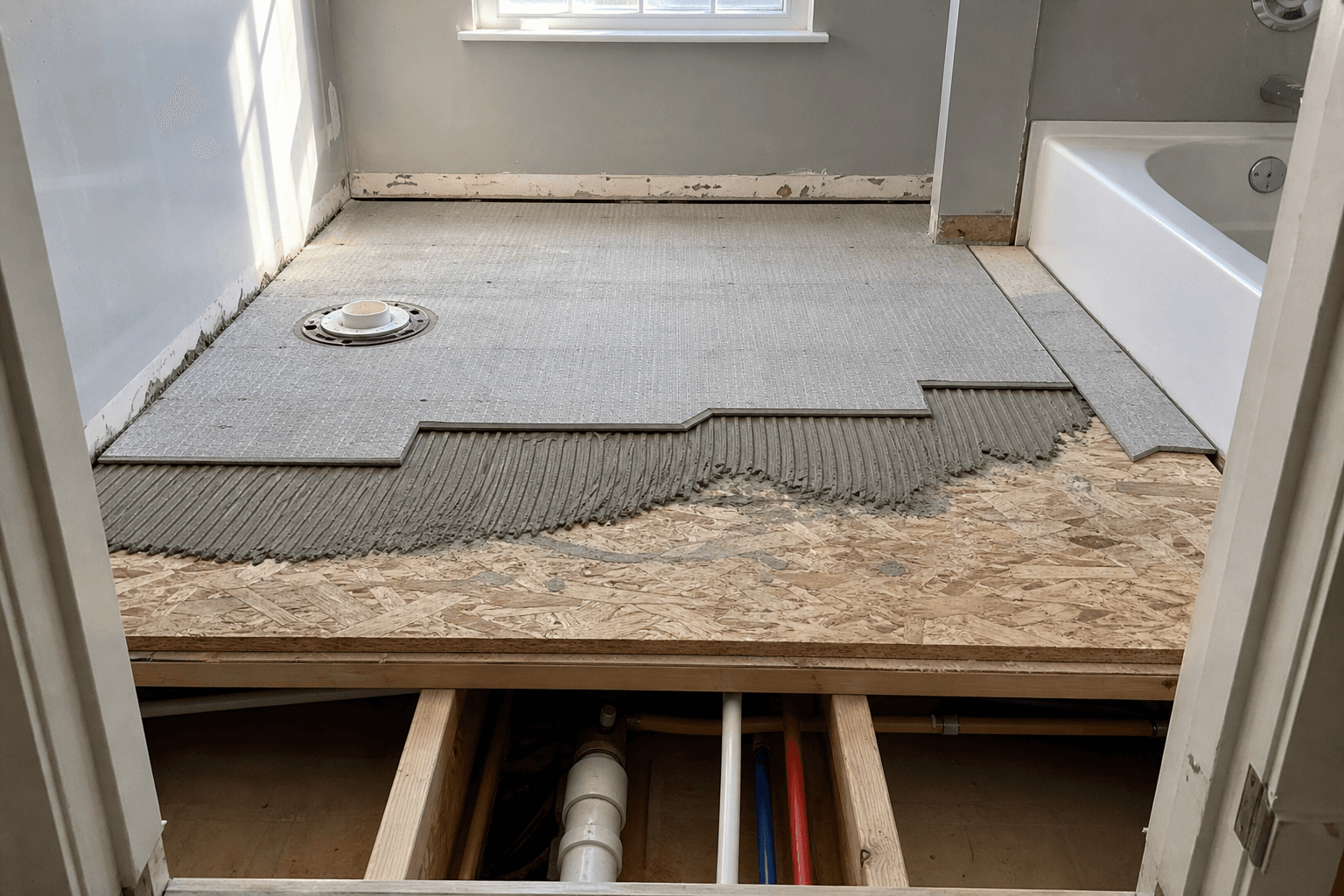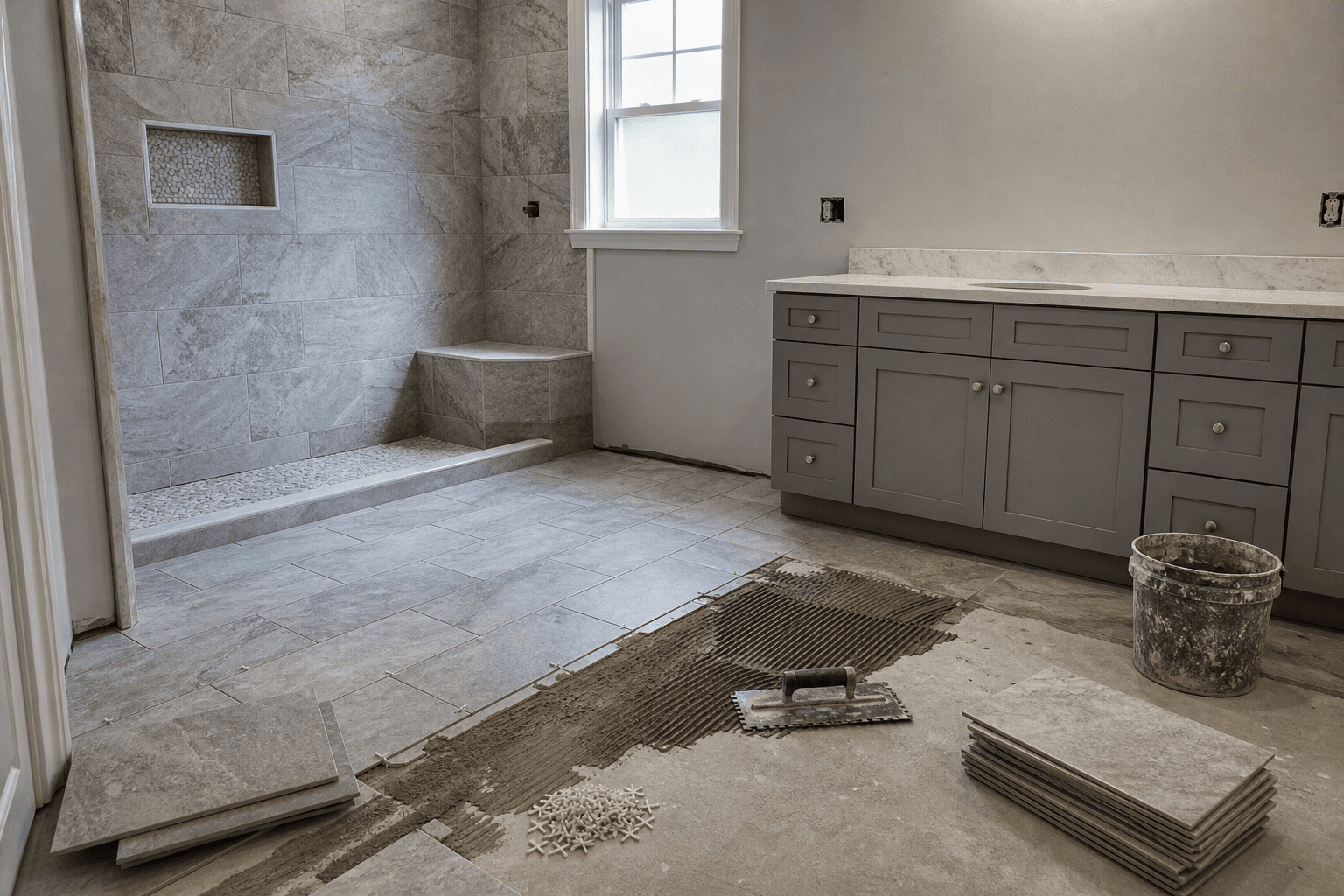
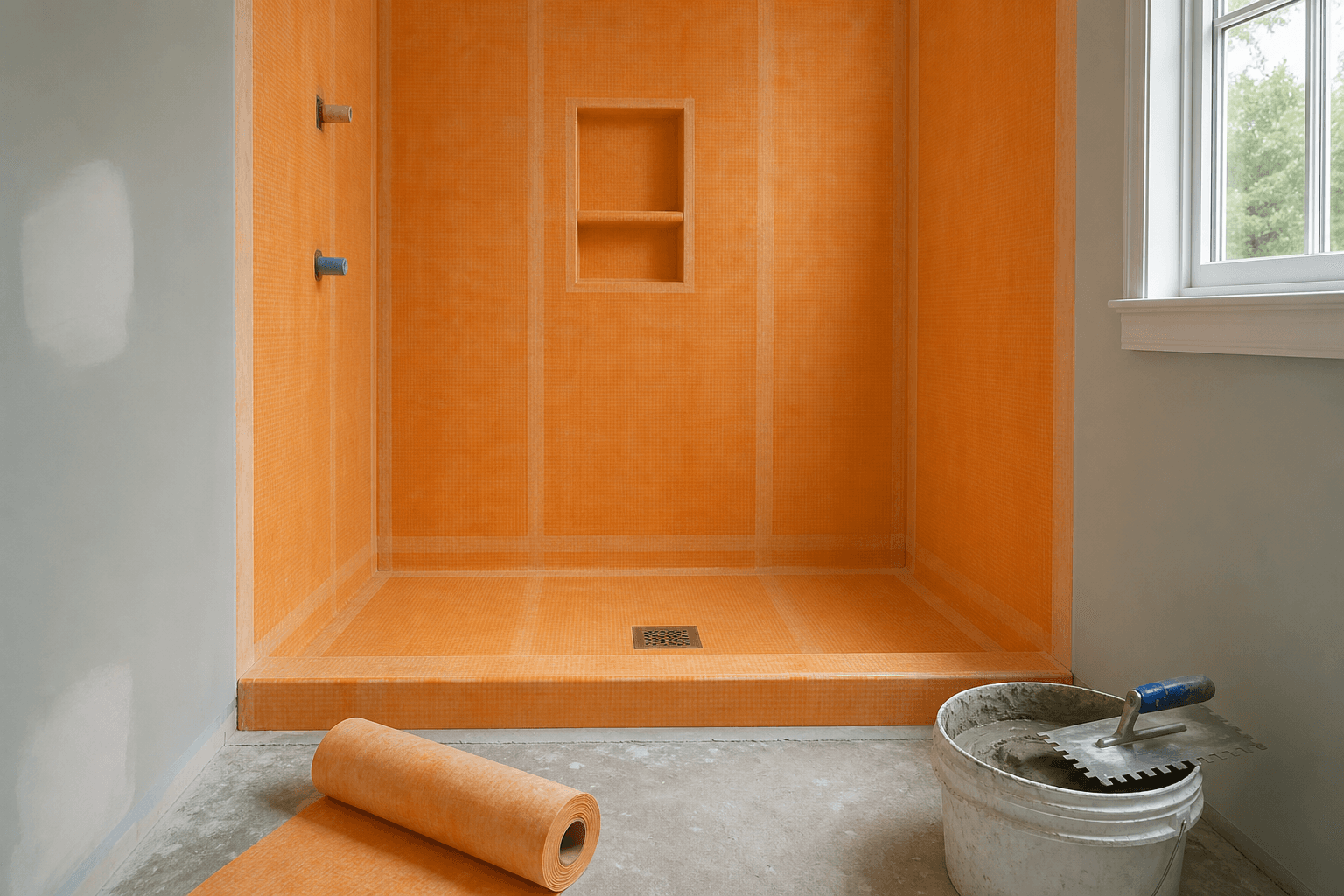
Start with the water barrier, not the tile
Tile and grout are the finish you see and clean. They are not what keeps the shower watertight. That job belongs to a separate waterproof layer behind and beneath the tile, which protects the wall framing and the floor structure. A different tile or a better grout does not replace that layer, and it tells you nothing about how the layer is built.
A useful proposal describes the water barrier itself and how its parts connect: where the walls meet the base, the inside corners, the seams between sheets or panels, and the drain. Seeing KERDI or another membrane listed tells you what material is planned. It does not tell you where that material goes, how the pieces are joined, or whether every area that gets wet is covered.
One question gets to most of this: What will keep water from reaching the structure behind my shower? A good answer walks you through the coverage and the connections in plain terms. Repeating a brand name is not an answer.
Partial wall coverage deserves the same attention. A proposal, or an existing shower, might show a short waterproofed strip near the floor with cement board above it. That arrangement does not, by itself, explain how the rest of the wall is protected. How far the waterproofing needs to go depends on the shower's layout and how it is built, so the installer should assess it and tell you what coverage it needs.
These questions apply anywhere in Ocean Township, whether your home is near the Monmouth County Library - Ocean Township Branch on Deal Road or across town. Our shower waterproofing page shows how the parts of the work fit together.
What KERDI and other waterproofing approaches mean
KERDI is a sheet waterproofing membrane made by Schluter. It goes onto shower walls and floors before any tile is set, and its seams and corners are sealed so the sheets work as one continuous water barrier. It isn't a type of tile, and you won't see it once the job is done. We offer Schluter KERDI installation as part of our shower waterproofing work.
KERDI is one example of a broader category, and the main approaches differ in where their weak points sit. Sheet membranes depend on sealed connections: every seam, inside corner and transition has to be joined so water can't slip between pieces. Liquid-applied coatings are brushed or rolled over a suitable backing and cure into a continuous skin. Waterproof backer boards are panels that resist water on their own, but the joints between boards and the spots where fasteners pass through still need treatment. With any of them, the useful question is how those connection points will be handled.
A traditional shower-pan liner is a different assembly altogether. The floor gets a mortar base shaped to slope toward the drain before the liner goes in, and the drain has small openings called weep holes that let water collecting below the tile escape. The liner protects the shower floor, so the walls still need their own water barrier, and the proposal should describe it. Because this design follows its own logic, it shouldn't be mixed piece by piece into a membrane system or treated as interchangeable with one.
No single system is the best choice for every shower. This guide doesn't rank brands or compare installed cost, service life or warranty across these approaches, so treat price and warranty as terms to read in each written proposal for your specific job. What matters most is fit. Once the installer has assessed your walls, base and layout, ask why the proposed approach suits them. Sealing methods, coating thickness and drying times follow the manufacturer's instructions and belong with the installer, not on your to-do list.
Include the base, drain, shelves and bench
A proposal can describe waterproofed walls in detail and still say nothing about the base, the drain or built-in features. Water collects at the base, runs toward the drain and sits on flat surfaces like shelves and benches. These are the places where one part of the water barrier has to meet another.
A shower pan is the shower base assembly: the floor of the shower that carries water to the drain. Because it works together with the drain, judge the two as one connection rather than picking a pan because you recognize the brand. Slope, backing, how pipes pass through the waterproofing and whether the materials are compatible are decisions for the installer, who can assess your actual shower.
A niche is a recessed shelf set into the wall, and a bench is a seat built into the shower. Each adds corners and edges that have to tie into the surrounding waterproofing, just like the seams and corners on a flat wall. Our scope covers waterproofing at seams, corners and drains, along with niches and built-in benches.
Two simple questions help when you compare proposals. How will the base and drain connect to the wall waterproofing? How are the shelf and bench included?
If a proposal leaves these unanswered, treat that as something to resolve before hiring, not as proof that anything is wrong. A photo or a recognizable membrane cannot show what is hidden behind it or whether a shower is ready for tile. Ask the installer how the waterproofing will be checked before tiling and who is responsible for that check.
Resolve curbless entry and layout changes before choosing
The shower you want can change what needs waterproofing, so settle the layout before anyone settles on a membrane. A product chosen first may not suit the entry, drain location or floor you end up with. The better order is to decide on the shower, have the structure and assembly assessed, then choose the system that fits.
Curbless means the shower has no raised threshold; the bathroom floor runs straight into the shower without a step. We offer curbless and low-profile showers only where the floor structure allows it, and we check that structure first. Whether your floor can be built to carry water to the drain without a curb is a judgment the installer makes after seeing it.
Without a curb, water has an easier path out of the shower area. Schluter's guidance says waterproofing for a curbless shower should ideally extend across the entire bathroom floor and must cover areas exposed to water. That is manufacturer guidance, not an Ocean Township rule, and how far the protection reaches in your bathroom is the installer's call.
Two questions are worth asking. Can my floor support the entry I want, or would a low-profile option make more sense? Which parts of the floor outside the shower will be protected, and why?
Moving a drain or changing fixtures raises a different question: who does that work? Our bathroom remodeling is tile-focused and does not include general plumbing or electrical work. If your plans for custom tile showers involve relocating a drain or valve, the proposal should state who handles those changes and how they connect to the waterproofing, so nothing falls between two trades.
Compare what is included before hiring
Two proposals can both mention a membrane and still describe different jobs, so compare the written scope item by item rather than the product name or the bottom-line total. We charge for installation and, depending on the quote, for preparation, setting and waterproofing materials. With any proposal, ask which of those items the price includes, which conditions still need to be assessed, and what could change once the old surfaces come off.
Then check that work outside the tile scope, such as moving a drain, adding a valve or changing lighting, is assigned to someone by name. Otherwise two quotes can look alike while leaving different work uncovered.
SIG Tile lists Ocean Township in Monmouth County, NJ, among the areas it serves. To get started, you don't need drawings, measurements or material counts. Describe the shower you want and anything you've noticed, such as loose tile, cracked grout or staining. Our quote form accepts optional room photos and close-ups of visible damage, which help frame the conversation. A visit may still be needed to confirm measurements, conditions and scope.
One more question belongs on your list: Are approvals needed for this scope, and who will handle them? The answer can depend on what the project changes, so settle it with the contractor in writing before work begins rather than assuming either way.
If you're planning a tiled shower in Ocean Township and want SIG Tile to look at your project, you can request a quote through sigtile.com or call 866-SIG-TILE to talk it through.
Common questions
What is the best waterproofing system for a shower?
There isn't one best system for every shower. Sheet membranes such as Schluter KERDI, liquid-applied coatings and waterproof backer boards each depend on different connection points. The right choice depends on your walls, base and layout, so ask the installer why the proposed system suits your assessed shower and which manufacturer instructions apply.
What are common shower waterproofing mistakes?
Common problems in proposals include treating tile and grout as the waterproofing, naming a membrane without explaining where it goes, covering only a short strip of wall with no explanation for the rest, and leaving the base, drain, niche or bench connections unexplained. Leaving drain or fixture changes unassigned to a trade is another.
Is a waterproof membrane necessary when tiling a shower?
A tiled shower needs a separate water barrier, because tile and grout are the finish, not the waterproofing. That barrier isn't always a sheet membrane like KERDI; liquid coatings and waterproof backer boards are other approaches. A traditional pan liner is a separate floor assembly that protects the base only, so the walls still need their own specified protection. Whatever is proposed, the installer should explain its full coverage and how its parts connect.
Does the entire shower wall need a membrane if only the first 1 foot is covered and the rest is cement board?
A waterproofed strip near the floor with cement board above it doesn't, on its own, explain how the rest of the wall is protected. How far waterproofing must extend depends on the shower's layout and construction, so ask the installer to assess the assembly and explain what coverage your shower needs.
Do I need a permit to remodel my bathroom in NJ?
The answer depends on what your project changes, and we can't give a blanket yes or no for Ocean Township here. Ask the contractor whether approvals are needed for your specific scope and who will handle them, and get that answer in writing before work begins.