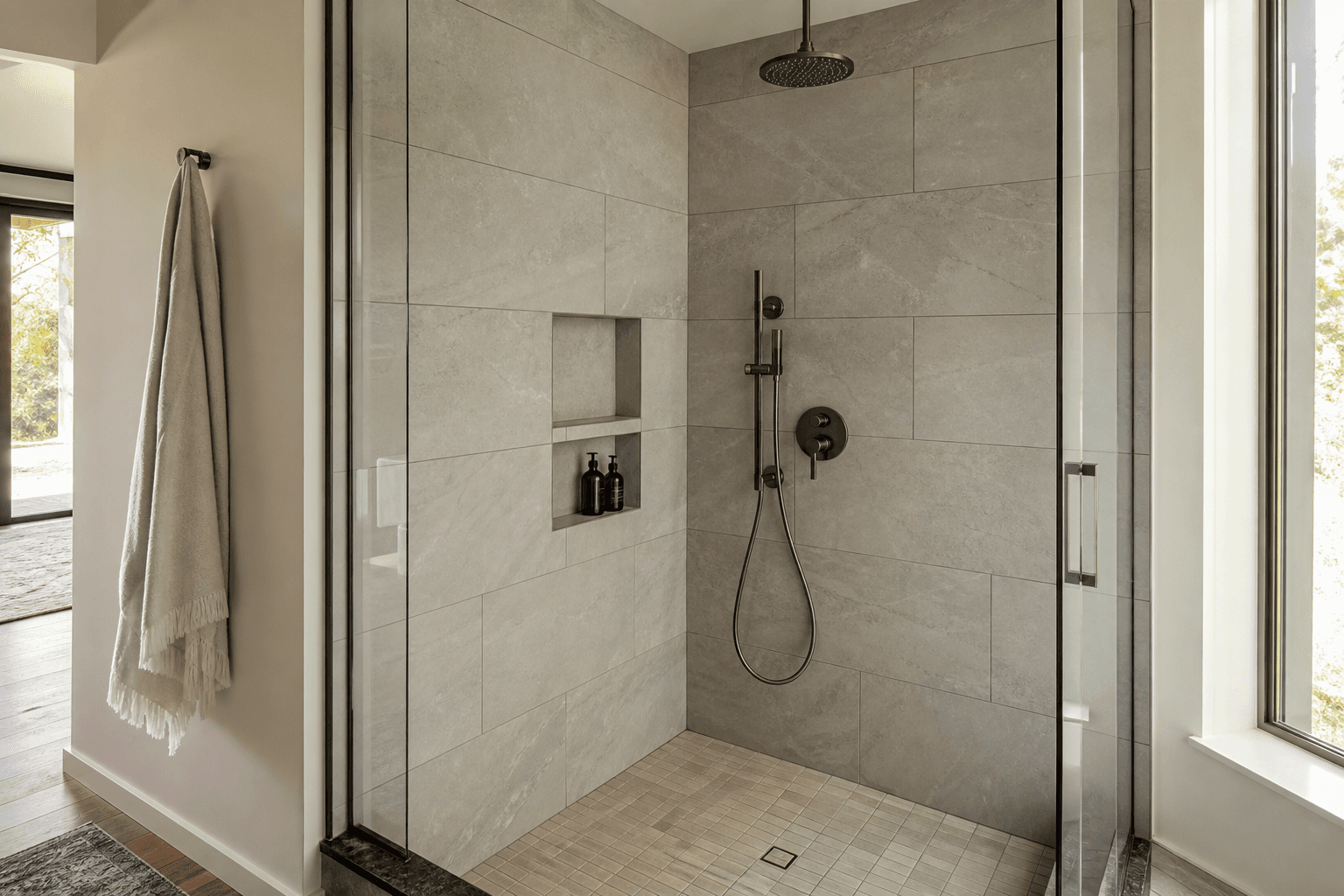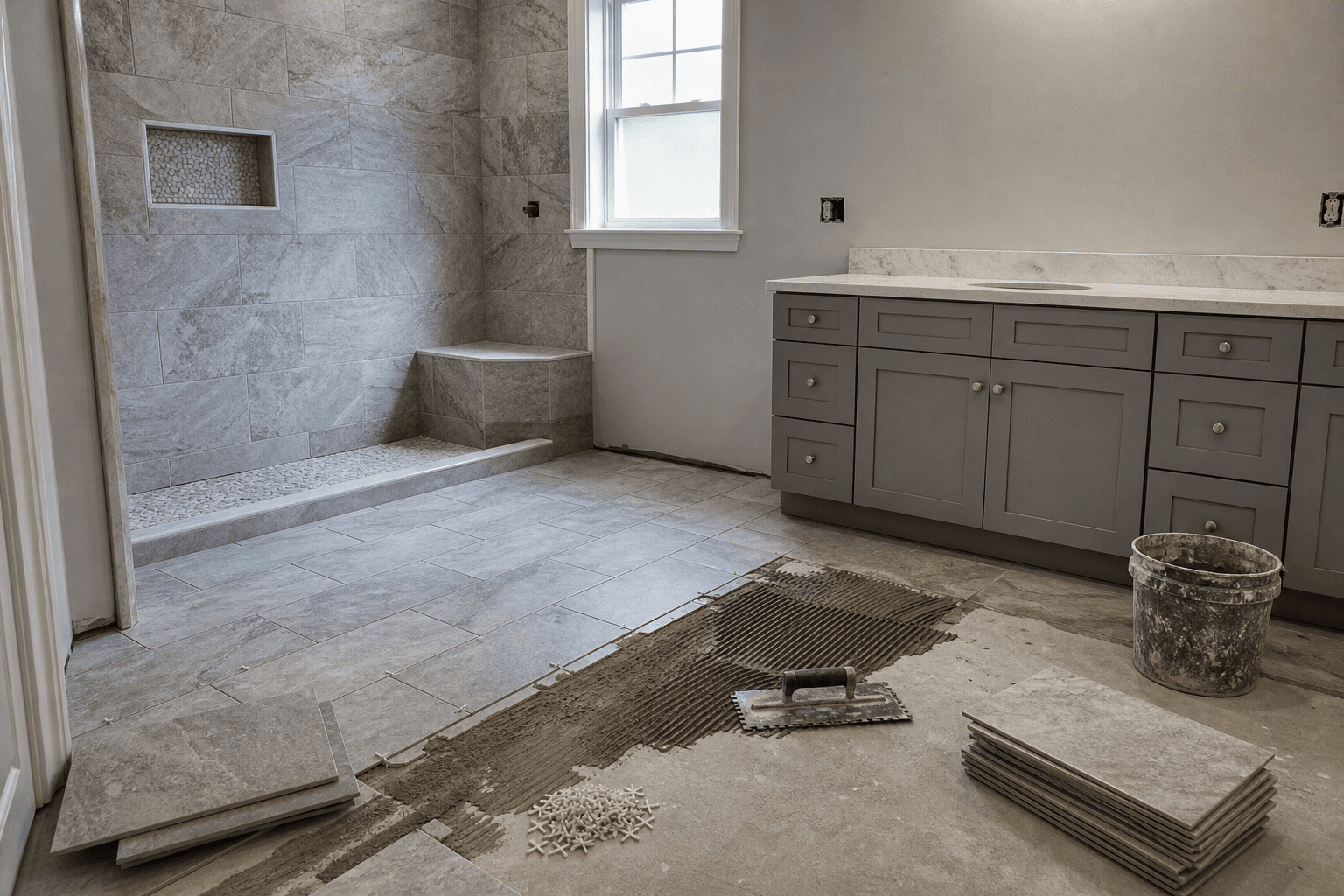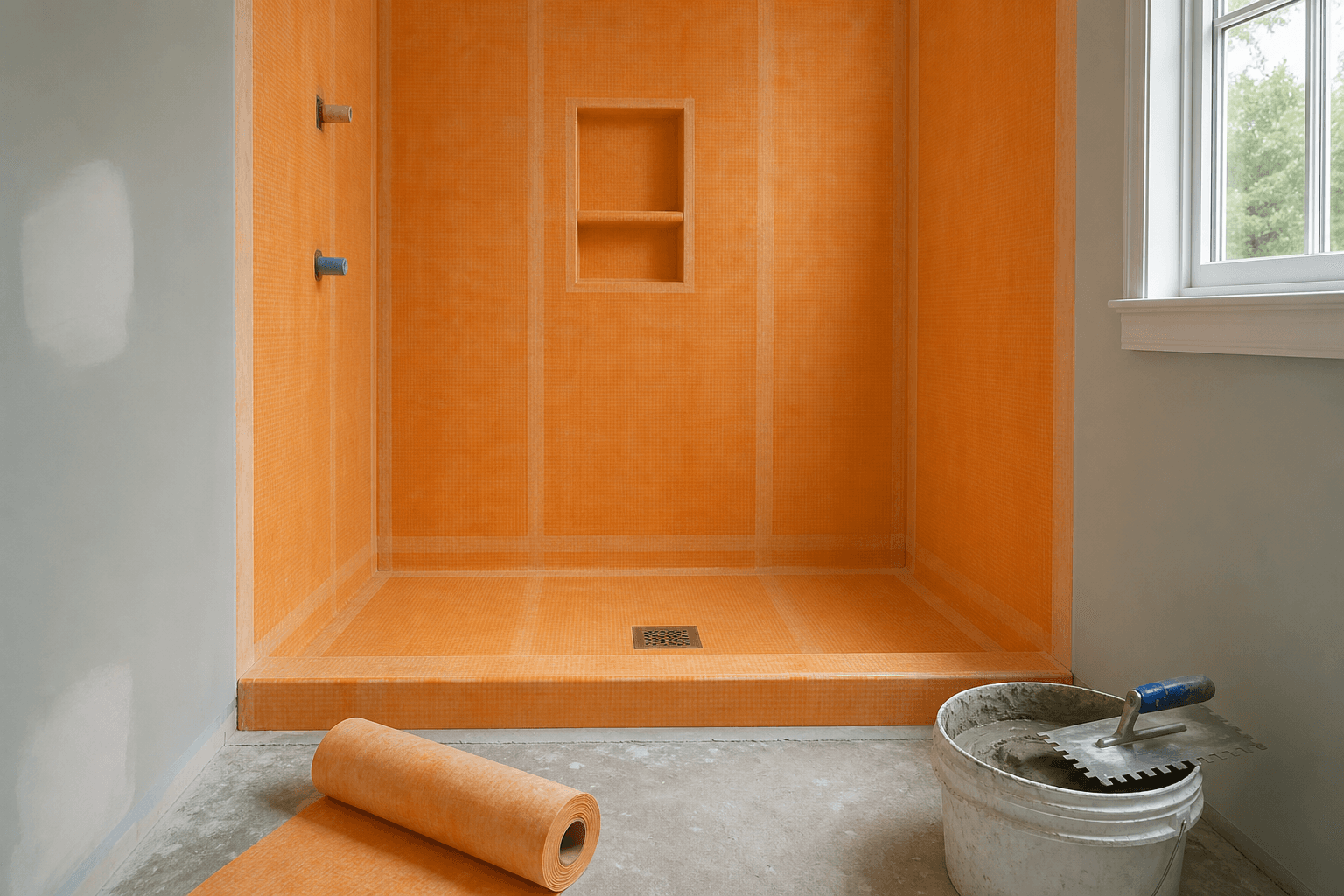
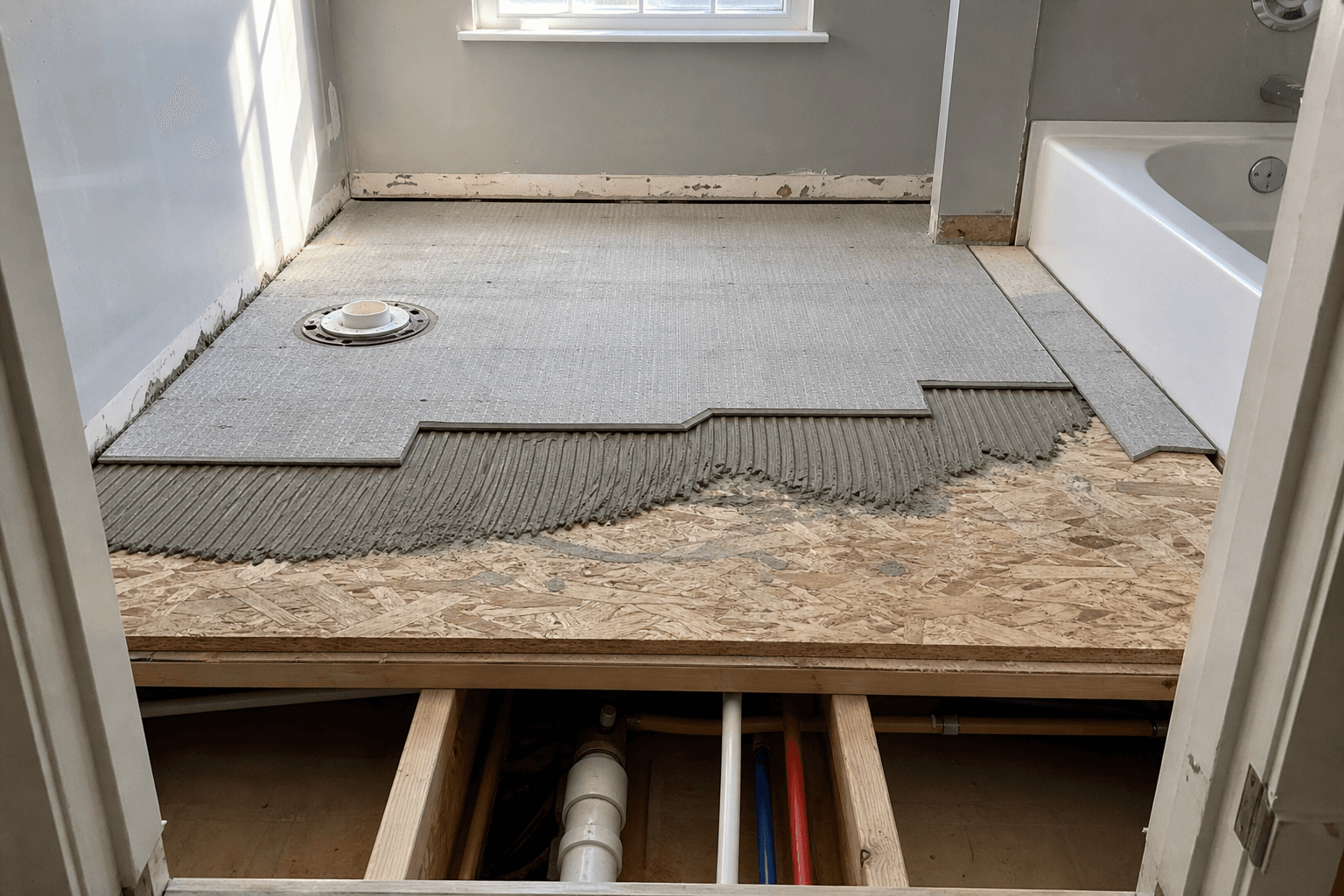
You don't have to design those layers yourself. What helps is knowing what each one does, so you can tell whether a quote covers the floor beneath the tile or only the tile on top.
The supporting floor, surface preparation and tile backing do different jobs
Three things sit under a good tile floor, and each does a different job. The subfloor is the supporting layer beneath the finished floor. It has to be stiff and even enough to carry tile without flexing. Surface preparation makes that floor flat, clean and solid so the tile has a sound surface to bond to. Underlayment, sometimes called tile backing, is a layer beneath the tile chosen to suit both the existing floor and the tile you pick.
Because those jobs differ, no single recipe fits every bathroom. A floor can look perfectly flat and still lack adequate support. Flatness describes the surface. Support describes how the floor behaves under weight.
That changes the decision in front of you. You don't need to pick the layers yourself. What matters is whether your installation estimate includes an assessment of the existing floor and the preparation it turns out to need. Our subfloor preparation work makes the supporting layer stiff and even enough for tile when the assessment shows it needs attention. You describe the tile you want and what you've noticed about the floor, and we work out what belongs beneath it.
Our service area includes Howell in Monmouth County, which covers homes throughout Howell Township, whether you live off Georgia Tavern Road near Manasquan Reservoir Environmental Center or elsewhere in town. That's only a point of reference. Homes near each other don't necessarily share the same floor construction, so each bathroom is judged on its own conditions.
Cracks, softness and movement need assessment before covering
You don't need to know why a bathroom floor cracks or gives underfoot to tell us about it. Plain descriptions help most. Maybe a crack runs across several tiles, or grout keeps breaking out. Maybe a spot near the toilet or tub feels soft or springy, you notice a dip when you walk across, or there's staining you suspect came from a leak. Tell us where it is and roughly how long you've noticed it.
Those observations are a starting point, not a diagnosis. A soft or moving floor can have more than one cause, and the cause decides what preparation makes sense. The supporting floor, its condition and the reason it moves have to be assessed first. Covering the problem with leveling compound or a membrane won't fix support that is weak or simply unknown.
The same goes for tiling over existing tile. Sometimes it's an option, but it isn't a shortcut you can count on. Is the old tile firmly attached? What's holding it up? Is there a moisture concern? How much would a new layer raise the floor? Those questions stay open until someone checks.
Please don't pull up flooring, scrape adhesive or cut into the floor to investigate on your own. The materials in an existing floor, and the adhesives beneath them, are unknown until they're identified, and disturbing them creates dust and debris you may not want in your home.
Our quote form accepts optional photos of the work area. A wide shot of the whole room, plus close-ups of cracks, stains or uneven spots, helps us understand what you're seeing. Photos can't show what's hidden underneath, though. Measuring and assessing the floor is our job, not yours.
Ask what leveling will change beneath your chosen tile
Self-leveling compound is a pourable material that fills low spots to create a flat surface before tile goes down. We use it when a floor needs it, not as a standard layer under every bathroom tile floor.
It also has a clear limit. Leveling makes the surface flat, but it does not make a weak or bouncy floor strong enough to carry tile. Whether the supporting floor is adequate is a separate question, and it needs an answer first.
Your choice of tile affects how much flattening matters. Large-format porcelain needs a very flat installation surface to sit evenly. If you like the look of big tiles, check what preparation the estimate allows for before you commit to them. A floor that feels fine underfoot can still need flattening for that kind of tile.
Leveling can also change where the finished floor ends up. Material added beneath the tile raises the surface, which affects how the bathroom floor meets the hallway or bedroom floor at the doorway. The contractor should look at the resulting floor height and explain how the two floors will meet. No single answer fits every doorway.
If your estimate may include floor leveling, two plain questions cover most of it. Does this floor need flattening for the tile I want? How will the finished floor meet the floor outside the bathroom?
Measuring the floor, choosing the product, working out quantities and handling primers and drying time are the contractor's job, not yours.
Choose compatible backing without assuming the floor is waterproof
The layer under floor tile can do several different jobs, and they're easy to mix up. Backing gives the tile and its setting material a suitable surface to bond to. Movement management helps the tile cope with small shifts in the floor below. Waterproofing stops water from passing through. One product doesn't automatically do all three, and not every bathroom floor needs every kind of layer.
Schluter DITRA is one option we install. Put simply, it's a thin plastic membrane set beneath floor tile that helps it handle small movements in the floor underneath. That job is limited. DITRA does not strengthen a weak or springy floor, it doesn't guarantee the tile will never crack, and it isn't the right match for every tile.
Cement board is another possible backing. It isn't interchangeable with DITRA, and which one suits your floor, if either does, depends on what the existing floor is made of and which tile you choose. Each manufacturer's instructions govern how its product is installed, so those decisions belong with the contractor.
If you have your heart set on a small basketweave porcelain mosaic, ask the contractor to confirm that the selected backing works with tiles that small. Don't assume DITRA, or any single product, is automatically the answer.
Tile and grout on their own do not stop water. Cement board or a membrane under the tile doesn't make the finished floor waterproof either. That depends on the complete system and how its seams and edges are handled. We waterproof showers and install Schluter KERDI with sealed seams and corners, but waterproofing a shower is not the same as waterproofing the whole bathroom floor.
When you review a proposal, ask which areas will be waterproofed and what system is included. If the answer covers only the shower, you'll know exactly where the protection stops. You can read more about Schluter DITRA installation before that conversation.
Request an estimate that separates installation from preparation
SIG Tile offers bathroom tile installation, subfloor preparation, floor leveling with self-leveling compound and Schluter DITRA installation for homeowners in Howell Township. Not every floor needs all four. A useful estimate shows which ones yours needs instead of folding installation and preparation into one vague line.
Getting started is simple. Use the quote form on our website to describe the look you want, such as large porcelain tiles or a small mosaic, along with anything you've noticed about the floor. Photos are optional. When the details call for it, we arrange a site visit to confirm measurements, floor conditions and scope. You don't need to measure the room or choose the layers yourself.
Once a proposal arrives, three questions bring out most of what matters. What assessment and preparation are included? Which setting and waterproofing materials are covered? And if part of the floor can't be fully judged until the old surface comes up, how would that change the work? A quote request isn't a binding estimate until the project details and scope have been reviewed and confirmed, so it's worth having those answers in writing.
For approvals, ask plainly what the proposed work needs and who will handle it. If your plans grow beyond the floor, keep in mind that our bathroom remodeling is tile-focused and doesn't include general plumbing or electrical work.
Once you know the tile you want and what you've noticed about the floor, you have enough to request an estimate for bathroom tile installation.
If you're planning a new bathroom floor in Howell Township and want to know what your existing floor will need, you can call SIG Tile at 866-SIG-TILE. Tell us the tile you have in mind and anything you've noticed, such as cracked tiles, a soft spot or a dip near the tub. Ordinary photos are welcome by email at contact@sigtile.com. We usually respond within 1 business day. If a visit makes sense, that's when we check the floor and take measurements, so the estimate can spell out what preparation is included.
Common questions
What should you put down before tiling a bathroom floor?
It depends on the floor you have and the tile you choose. The tile needs a well-supported floor, a clean and flat surface, and a compatible backing and setting material. Leveling compound goes down only where low spots need filling. The contractor should assess the floor and specify the layers.
Do I need a membrane under tile in the bathroom?
Not always. A membrane such as Schluter DITRA helps tile cope with small movements in the floor below, but it doesn't strengthen a weak floor or guarantee against cracks, and it isn't right for every tile. Whether your bathroom needs one depends on the existing floor and tile, which the contractor should assess.
Do I need cement board under floor tile?
Not necessarily. Cement board is one possible backing, but it isn't interchangeable with a membrane, and not every floor needs it. The right choice depends on what the existing floor is made of and the tile you pick, and each product's instructions govern its use. Cement board alone doesn't make a floor waterproof.
What underlayment should go beneath a small basketweave porcelain mosaic bathroom floor?
There's no single answer without seeing the floor. Compatibility matters with tiles that small, so ask the contractor to confirm the selected backing works with your basketweave porcelain mosaic. Don't assume DITRA or any one product is automatic. The existing floor still needs to be assessed and prepared before any backing goes down.
Is it possible to change bathroom tiles without removing them?
Sometimes, but it depends on what's there. Whether new tile can go over old depends on how firmly the old tile is attached, the support beneath it, any moisture concerns and how the added height meets the doorway. A contractor needs to check those. Please don't pull up or cut into old flooring yourself.
Do I need a permit to remodel my bathroom in NJ?
That depends on the scope of the work, and this guide doesn't cover New Jersey or Howell Township permit rules. Before work begins, ask your contractor plainly what approvals the proposed work needs and who will handle them, and get that answer in writing along with the rest of the scope.