The tile you like is a good starting point, but it is only part of the decision. What sits behind it, how neighboring edges meet and where storage and fixtures go all affect whether a particular large tile suits your shower.
Choose the look before committing to a tile size
Large porcelain tiles and oversized porcelain panels are separate options, and SIG Tile installs both. They are not two names for the same product. Large-format porcelain tile still goes up as individual pieces set in a planned pattern. Oversized porcelain panels are much bigger sheets that can cover a broad stretch of shower wall with very few joints.
Shopping listings show the difference in scale. They include a 24 by 48 inch porcelain tile and a porcelain shower panel 32 inches wide and 96 inches high. These are only examples. They do not mark the line between tiles and panels, they are not maximum sizes, and they are not products recommended for your shower.
Either way, bigger pieces usually mean fewer grout lines than smaller tile on the same wall. The actual count still depends on the layout and the cuts at corners, edges and openings. Neither option gives you a wall without joints. Tiles and panels still meet each other, the corners and the openings, and how those joints are filled or finished depends on the product you choose and its manufacturer's requirements.
Start with the look you want. That could be a calmer wall with fewer lines, a particular color or finish, or a surface that reads as nearly continuous. Bring that goal and any product you like to the installer, and have them review it for your shower before you buy. The largest piece available is not automatically the one that gets you that result.
Keep the floor as a separate decision. A tile approved for shower walls is not automatically suitable for a floor that has to slope toward the drain.
The walls and waterproofing need assessment first
Large porcelain tiles need a very flat wall behind them, and preparing the wall is part of our large-format porcelain work. A bigger tile spans more of the surface in one piece, so dips and bumps have fewer places to hide. The installer has to judge in person whether your walls are already flat enough or need correcting or rebuilding.
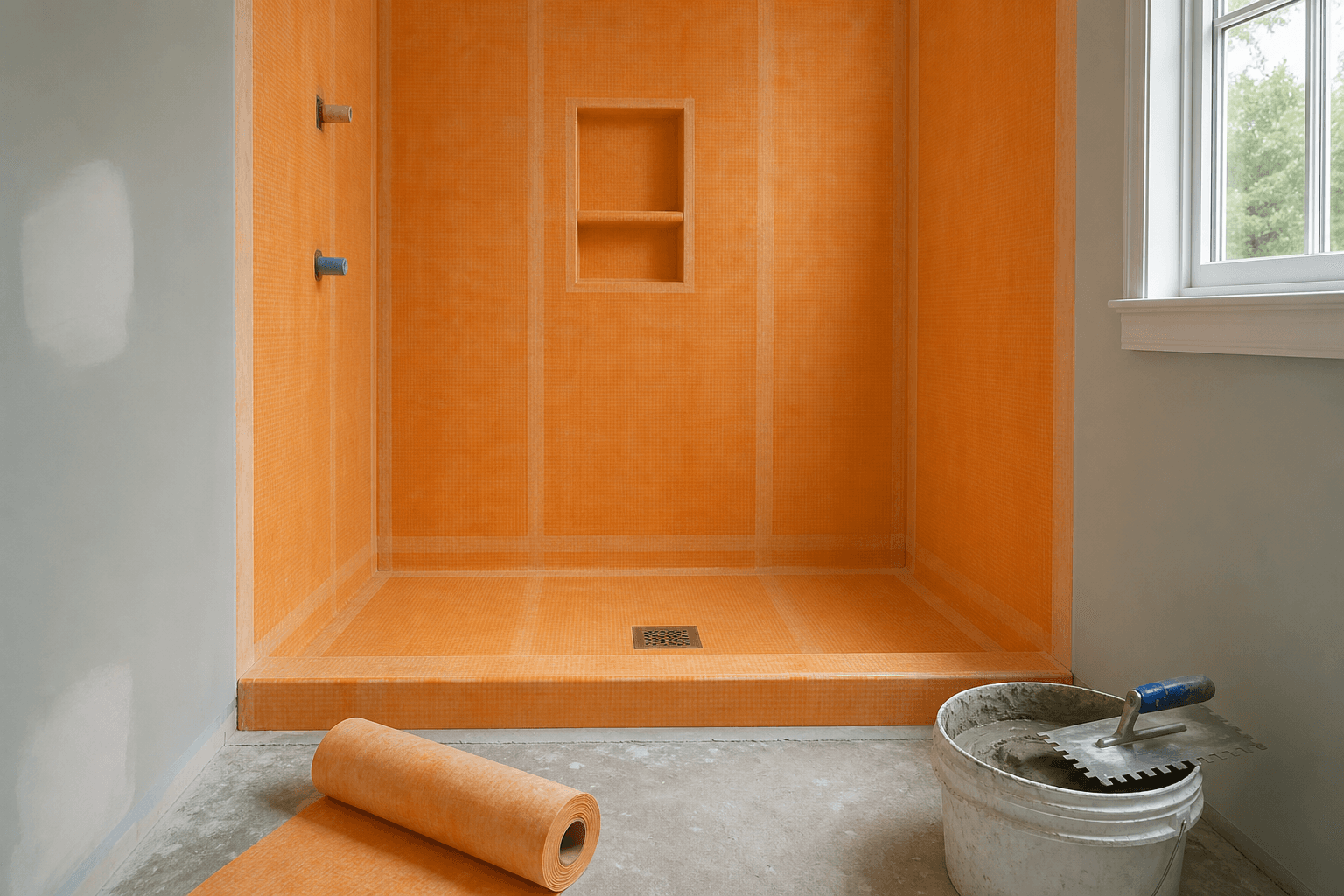
Flatness and waterproofing are separate jobs. A flat, solid wall supports the tile. Waterproofing keeps shower water from reaching the wallboard and framing behind it. Tile and grout alone do not stop water, so a suitable waterproofing layer belongs behind the tile whatever its size. One option we install is Schluter KERDI, a sheet membrane with sealed seams and corners. It is one approach, not the required system for every shower.
Much of what matters stays hidden until the shower is assessed. That includes the condition of the backing, how well the framing supports the wall, any past leaks or water damage, and whether the existing waterproofing is suitable at all. Larger tiles do not make an old wall reusable, and tiling over damaged or doubtful walls only hides the problem.
The installer also checks the manufacturer requirements for the tile, backing, bonding material and waterproofing, and confirms they work together. Your part is one plain question: what needs to be repaired or replaced before these tiles can go up? The answer shapes the scope of the work and tells you whether your chosen tile still makes sense for this shower.
Fewer grout lines still require careful edge alignment
Fewer grout lines come with a tradeoff. When each piece covers a large area, any mismatch where two edges meet is easier to see.
That mismatch is called lippage: adjoining tile edges sitting at different heights, so one edge stands slightly proud of its neighbor. On a large, smooth face, a raised edge can catch the light or feel rough under your hand.
Both the tile and the installation can play a part. Some tiles are not perfectly flat out of the box, and the size of the grout joint affects how much room the installer has to work with. Neither point proves that a particular product will cause problems. They are reasons to talk the choice through before you commit.
While you are choosing the tile and arrangement, ask how this tile and layout will affect the visible joints, and where uneven edges are most likely to show. The installer settles the technical details for the product you pick, including joint widths, how far rows are offset, where flexible movement joints go and which tolerances apply. No one can honestly promise perfectly flush edges on every piece, but a clear answer helps you judge whether the tile suits the look you want.
Fewer pieces also do not automatically mean a faster or cheaper job. Large tiles can take extra care to handle, set and align, so compare quotes on the full scope of work rather than the number of tiles.
Plan bottle storage and fixture openings with the tile
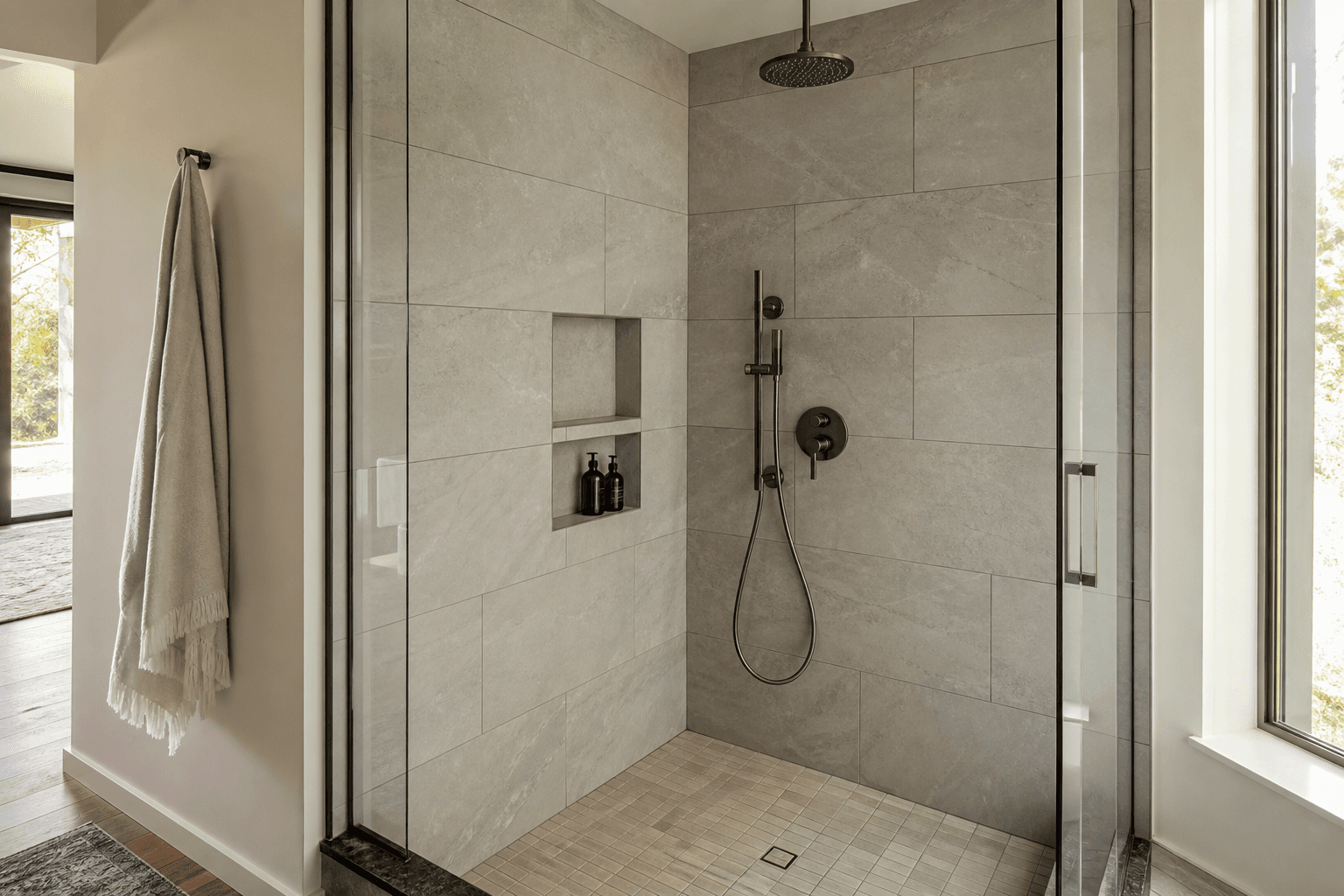
A shower niche is a recessed shelf built into the wall for bottles and soap. SIG Tile installs shower niches, and waterproofs and tiles them as part of the shower. If you want one, say so early, while the installer is still working out the layout. With large pieces, a niche added late can end up straddling a joint or leaving a thin sliver of tile where a clean edge was intended.
Bigger tiles still need cuts around every storage opening, valve and shower head. Tile size alone cannot tell anyone where joints or finished edges will fall. That comes from laying out the actual wall with the actual product. Switching to oversized panels does not remove these decisions, because openings still have to be planned and sealed.
Your part is to describe what you want to store, roughly where it would be handy, and whether you plan to change any fixtures. You do not need to measure openings, sketch a layout or work out cuts. The niche size, how it sheds water, how its edges are finished, whether a cut is practical in the chosen tile and how the openings are waterproofed all belong to the installer, following the requirements of the products you select.
One boundary is worth knowing up front. Our bathroom work is tile-focused and does not include general plumbing or electrical work. If moving a valve, adding a shower head or changing lighting is part of your plan, do not assume it is included in the tile installation.
Arrange an assessment before ordering your shower tile
SIG Tile serves Farmingdale in Monmouth County, from the streets around Lutz Park on Main Street to the rest of town, and offers shower tile installation along with large-format porcelain tile and oversized porcelain panels. The best time to bring us in is before you buy tile, because what your walls need can change what makes sense to order.
To start, describe the shower you want through the quote form on our website. If you can, attach ordinary photos of the room and close-ups of any visible damage, such as cracked grout or loose tiles. You can also call 866-SIG-TILE.
Photos give us a first look, but they cannot show whether the backing, framing or old waterproofing behind the tile is sound. A site visit may be needed to confirm measurements, conditions and scope. Measuring the walls and working out quantities and specifications is our job, not yours.
If you are comparing quotes, check that each one covers the same work: removing the old tile, preparing the walls, waterproofing, any niche and the installation itself. A lower figure that leaves out preparation or waterproofing cannot be fairly set against one that includes them. Totals posted online for other people's projects tell you very little about your own shower.
During the assessment, also ask whether any of the planned changes need approvals, and who arranges them.
Before you buy, share the tile or panels you like and the finished look you have in mind, so the installer can confirm the product suits your walls before anything is ordered.
If you have a large porcelain tile in mind for a new or replacement shower, you are welcome to call SIG Tile at 866-SIG-TILE or email contact@sigtile.com with the product name, a short note on the look you want and a few ordinary photos of the current shower.
From there, the installer can tell you what would need a look in person before you order any tile.
Common questions
Can you put large tiles on a shower wall?
Yes, large porcelain tiles can go on shower walls when the product is suitable for wet walls and the wall behind it is very flat, solid and waterproofed. The installer checks that the tile, backing, bonding material and waterproofing work together before anything goes up.
Is 12x24 tile too big for a shower?
Not necessarily, but no tile size is automatically approved for a shower. Whether 12 by 24 inch tile suits yours depends on the specific product, how flat and sound the walls are, the waterproofing and how the layout works around niches and fixtures. Have the installer confirm it before you order.
What is the biggest size tile for shower walls?
There is no single maximum. Large tiles and oversized porcelain panels are both options for shower walls, and shopping listings include a panel 32 inches wide and 96 inches high, but that is an example, not a limit. The workable size depends on the product's requirements, your walls and the installer's assessment.
What do you put under tile in a shower?
A flat, solid backing and a waterproofing layer. Tile and grout alone do not stop water, so the waterproofing keeps it away from the wallboard and framing. Sheet membranes such as Schluter KERDI, sealed at seams and corners, are one option; the installer chooses a system compatible with your tile and backing.
What are the downsides of large-format tiles?
They need very flat walls, so preparation can add work. Uneven adjoining edges, called lippage, can be easier to see on large tiles, and some tiles are not perfectly flat. Cuts around niches and fixtures need careful planning, and fewer pieces do not automatically mean a faster or cheaper job.
What is the average cost to retile a bathroom shower?
There is no reliable average we can give for your shower. Price depends on the scope: removal, wall repair or preparation, waterproofing, niches, the tile chosen and installation. Online totals often cover different work, so compare quotes that include the same scope, and have the installer assess the shower first.