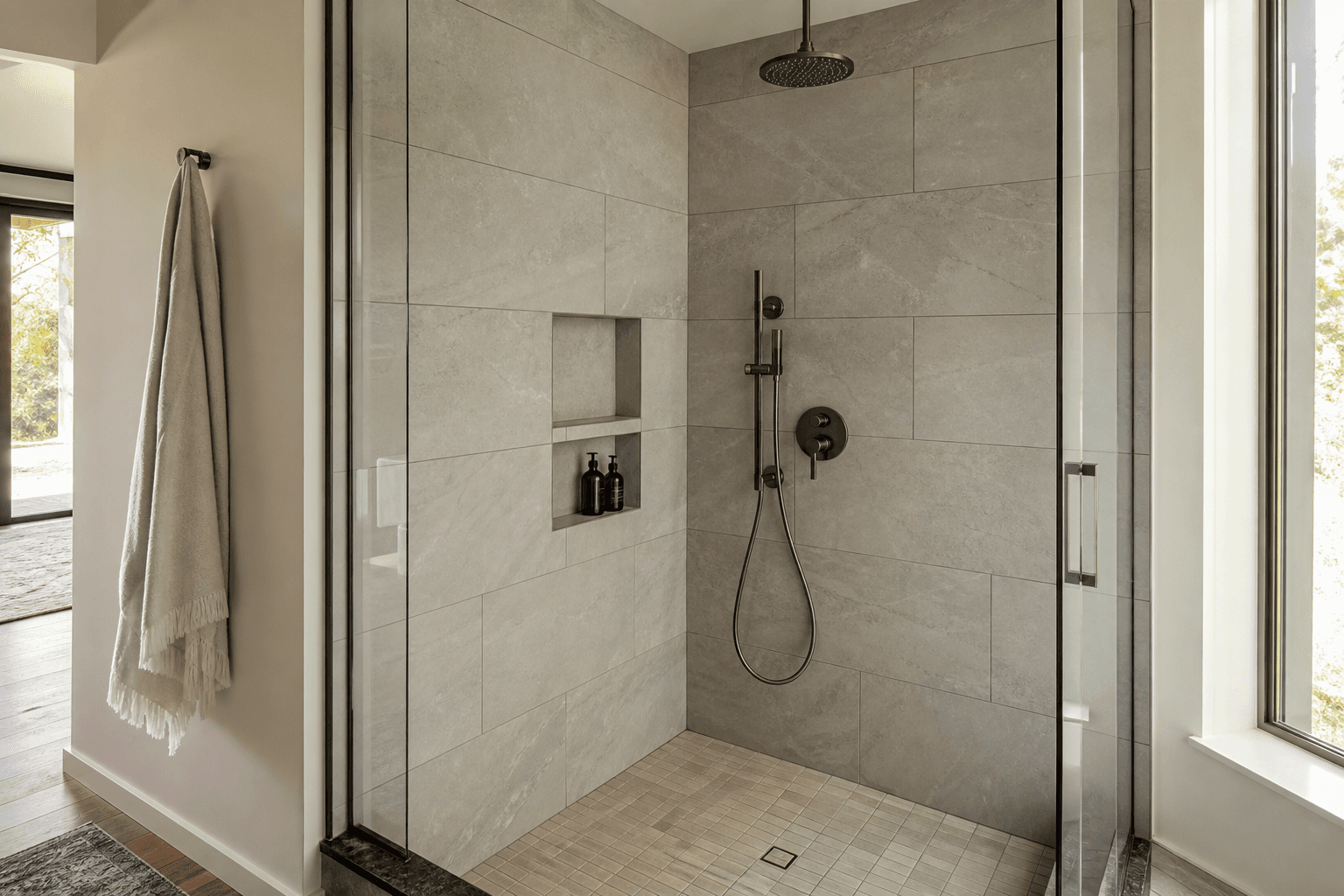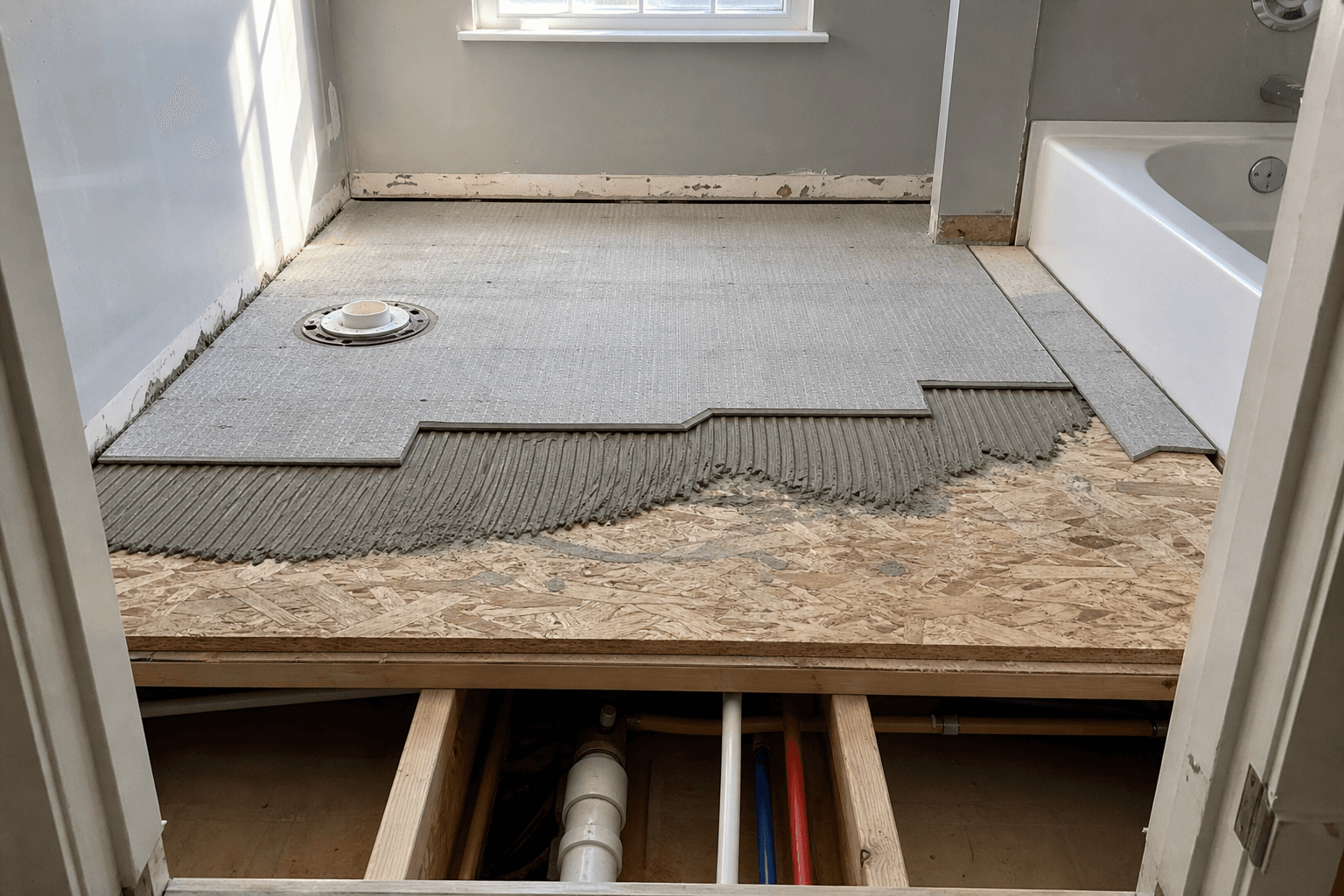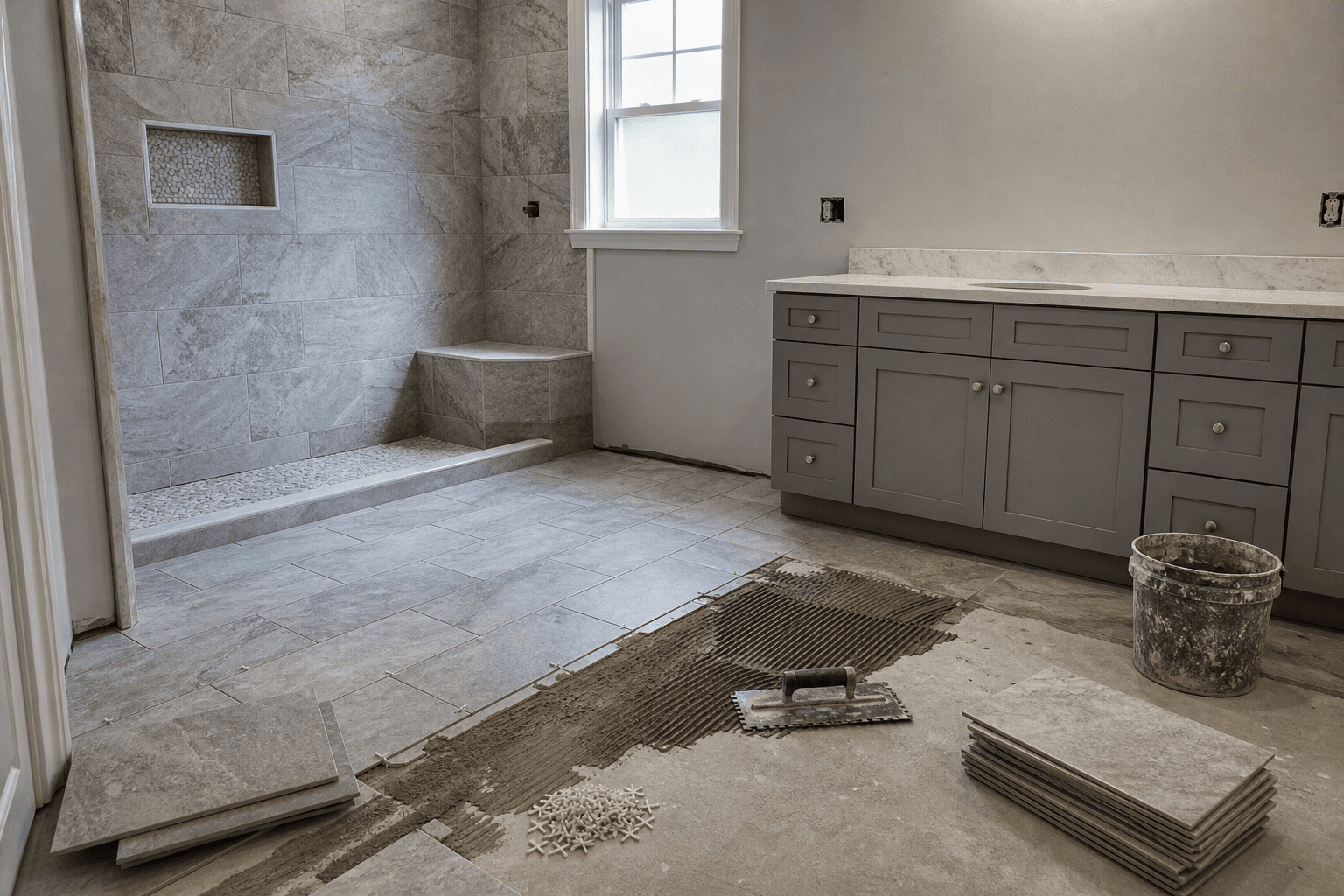
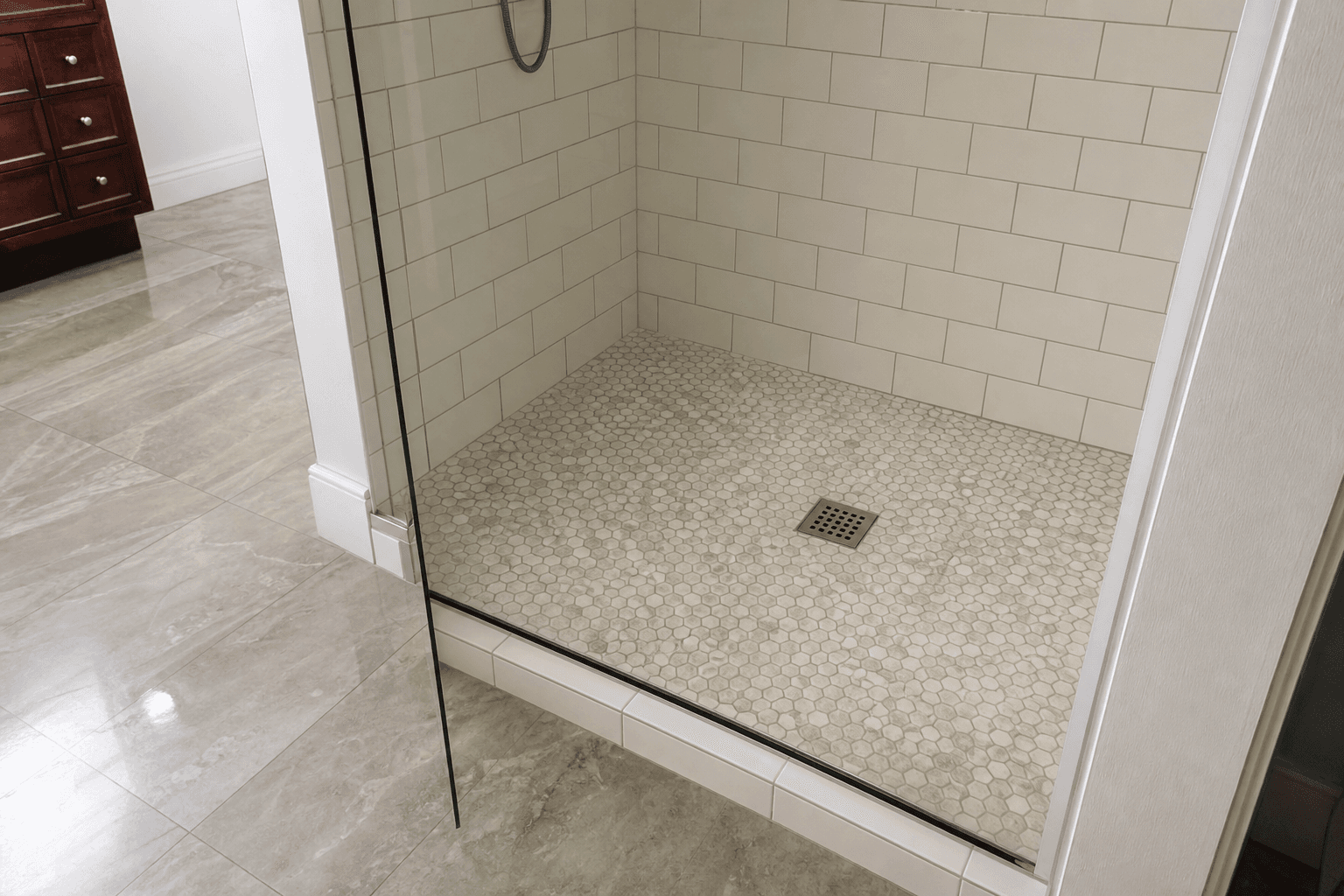
Start with the drainage problem, not the new tile
If water sits on your shower floor, new tile alone is not a dependable fix. Tile is the surface you see and stand on. Whether water reaches the drain depends on what lies beneath the tile and on the drain itself, so the cause needs to be found before anyone settles on a repair.
Three areas could be involved. The first is the tiled surface: cracked or loose tiles, or worn grout. The second is the shower pan, the waterproofed base under the tile. If it was built without enough fall toward the drain, has shifted or is failing, water can collect no matter how good new tile looks. The third is the drain and the plumbing connected to it. These are possibilities to look into, not a diagnosis of your shower.
Asking someone to remove, re-level and retile a shower floor is a common way to describe the job and a fair way to start the conversation. But it names a method, not a cause. Retiling over a base that already holds water can leave the same puddle under a fresh surface.
A useful first question for any contractor is whether your problem calls for tile work, an assessment of the pan or a plumber. SIG Tile handles shower tile installation and shower pan replacement, but we do not do general plumbing. If the cause is in the drain line, that part belongs with a plumbing professional.
A shower floor needs slope, not simply a level surface
The shower pan's job is to give the floor slope: the surface falls toward the drain so water runs to it. That is why asking for a re-leveled floor can point the wrong way. On a perfectly level floor, water has nowhere in particular to go, so it can sit in puddles or drift toward the edges.
It also helps to picture a tiled shower as two layers doing different jobs. The tile and grout are the finish. They take daily wear and give the shower its look, but they do not stop water on their own. Behind and beneath them sits a waterproof layer that keeps moisture away from the wall and floor structure. Setting new tile changes the finish. It does not automatically renew that protective layer or change the slope of the base underneath.
That difference shapes what you ask for. New tile can make a shower look far better while the drainage problem stays put. Correcting poor drainage and dealing with failing waterproofing are different outcomes from a fresh surface, and which one your shower needs should be assessed, not assumed.
When the base itself is the problem, SIG Tile's pan replacement work removes the failing shower floor, builds a new waterproofed, sloped base and finishes it in tile. If the protective layer is the main concern, that falls under our shower waterproofing work. How a new base or waterproofing meets the drain, the walls and existing materials, including any measurements, is part of the contractor's assessment, not something you need to work out.
Compare tile replacement with rebuilding the shower pan
The two jobs fix different things.
Damaged tile replacement: works on the surface you see and stand on, such as cracked, loose or broken tiles and the grout around them. It leaves the base underneath in place.
Shower pan replacement: rebuilds the part underneath that carries water to the drain and keeps it out of the structure. It may be needed when the base is failing or poorly sloped.
For a floor that holds water, tile-only work is something to assess, not a starting assumption. It makes sense only if the contractor finds that the base is sound and slopes toward the drain, that the existing waterproofing can stay intact while tiles come out, and that a compatible repair is possible. If any of those falls short, new tile would sit on top of the same problem.
A new pan does not automatically mean the whole shower has to go. Because the waterproof layer runs behind the tile as well as beneath it, the work may reach into nearby wall areas or the shower entry. How far it extends can't be known until the shower is assessed, so nobody should promise in advance that the walls will stay untouched. The drain connection and the floor supporting the shower belong in that assessment too, with any plumbing cause referred to a plumbing professional.
Whatever option is proposed, ask two plain questions: what does this work fix, and what does it leave unresolved?
Share what you see without testing or taking the shower apart
You don't need tools, a level or any kind of test to start this conversation. Begin with the result you want: a floor that drains properly, new tile, or both. Then describe what you notice in everyday use. Where does water sit after a shower: in a corner, along the entry, in a low spot away from the drain? Do you see cracked tile, cracked or missing grout, or pieces that seem loose? A hypothetical note might read: "After a normal shower, water stays in the back corner for a while, and two floor tiles near the door look cracked."
Photos are optional on SIG Tile's estimate form. If you include them, a wide view of the whole shower plus close-ups of any damage give a useful starting picture for an initial review. They have limits, though. A photo cannot show whether the waterproofing under the tile or the floor supporting the shower is sound. Measurements, inspection and the technical assessment stay with the contractor.
If you suspect a leak, for example staining on a ceiling below the bathroom, dampness outside the shower or a floor that feels soft, mention it promptly and ask a qualified professional whether the shower should stay in use until it has been looked at. Nothing visible from the surface rules out concealed water damage or mold.
Please don't pull up tile, take the drain apart or run water to recreate the problem. Those steps belong to the assessment, and doing them yourself can add damage and make the existing condition harder to judge.
Ask what must be confirmed before your Red Bank estimate
SIG Tile serves Red Bank in Monmouth County, and the first step is the same whether your home is a few blocks from Red Bank Public Library on West Front Street or across town. Location says nothing about your bathroom; what your shower shows is what matters.
Start by describing the project and sharing any photos you have. Renan reviews them, and when needed, a site visit follows to confirm measurements, conditions and scope. A quote request is not a binding estimate until those details have been reviewed and the scope is confirmed.
That review is a good time to ask a few plain questions. What seems to be keeping water on the floor? Does the pan need replacing, or can the existing waterproofing stay? Could the work extend to the lower walls or the shower entry? Is a plumber needed for the drain? Does this project need any approvals, and who handles them?
Price and how long the shower will be out of use stay open until the cause is known. A floor retile and a rebuilt base with adjoining work are very different projects in labor, materials and time.
When you reach out through our estimate form, describe the drainage concern itself: where water sits, any cracks and any leak worries. That gives the review a better starting point than asking for shower tile installation as if the fix were already decided.
If water keeps sitting on your shower floor, you're welcome to call SIG Tile at 866-SIG-TILE. Tell us where the water collects, any cracks you've noticed and whether you've seen signs of a leak, and ask what would need to be looked at before a scope or price can be set.
If a leak seems likely, mention it at the start of the call and ask whether the shower should stay in use until someone has seen it.
Common questions
What are the common problems with shower tiles?
Cracked, loose or broken tiles and cracked or missing grout are the problems people notice most. Water that sits on the floor is a different issue, often tied to the slope of the base beneath the tile or to the drain. Tile and grout are the finish; they do not stop water on their own.
What are common shower waterproofing mistakes?
Common ones include treating tile and grout as the waterproofing, retiling over a protective layer that is already failing, and building a floor that is level instead of sloped toward the drain. Each can leave water where it shouldn't be. Whether your existing waterproofing can stay is something a contractor needs to assess.
How much does it cost to rewaterproof a shower?
There's no reliable figure without seeing the shower. Cost depends on whether the pan needs rebuilding, how far the work reaches into nearby walls or the shower entry, and the condition of the floor underneath. SIG Tile confirms scope after reviewing your project and photos, with a site visit when needed.
Do I need a permit to remodel my bathroom in NJ?
It depends on the scope of your project, and this guide can't settle it for you. Retiling a floor and rebuilding a shower pan are different jobs, and drain or plumbing work may raise separate questions. Before work starts, ask your contractor whether any approvals are needed and who will handle them.